Asia
Koahsiung Itinerary: 3 days to 5 days suggestions!
Mar
Kaohsiung is one of the biggest cities on the west coast of Taiwan. Although not as historic as Tainan or as popular as Taichung, this once industrial-focused city has transformed into a vibrant metropolis that fully embraces its history and art.
While I didn’t get the chance to explore the surrounding nature or travel to the nearby city of Tainan, Taiwan’s very own Hawaii, Xiaoliuqiu, is only about an hour away. It has an airport connected to the city by metro, as well as a high-speed rail that reaches Taipei in three hours. Hualien is also approximately the same travel time away.
Table of Contents
A Brief History of Kaohsiung
Kaohsiung was once a sleepy fishing village called “Takao” by the indigenous people, first mentioned in the 16th century by Spanish and Dutch explorers. It eventually developed into a port city, most famous for rice exports and shipbuilding, with the island of Cijin serving as a natural protection for the ships that ported and docked there.
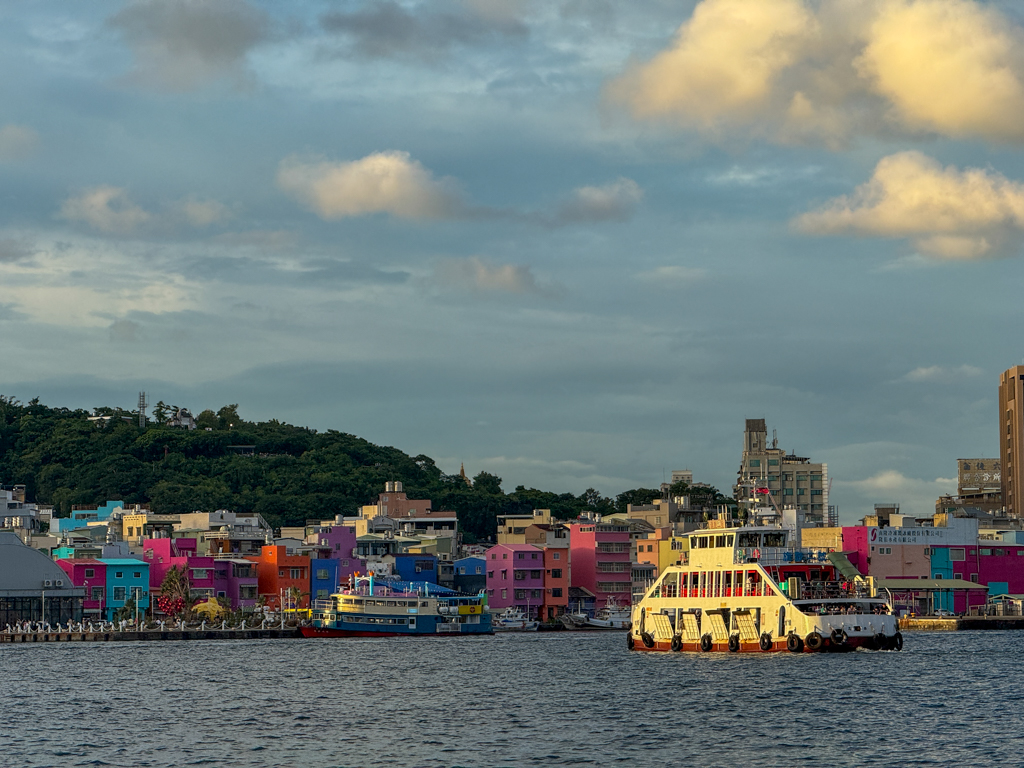
The city underwent further development under Japanese occupation in the 20th century, with the addition of railways, modernised ports, parks, and wide roads. It continued to be an industrial powerhouse after the Second World War, rapidly expanding to accommodate the influx of workers moving to the city for employment.
Nowadays, manufacturing and shipping still dominate the city’s economy, but tourism is on the rise!
Getting Around Kaohsiung
The public transport system in Kaohsiung is well connected, but it is a relatively spread-out city from a tourist’s point of view.
If you visit in the summer, taking a taxi (or using Uber) might be worthwhile. You can use the EasyCard 悠遊卡 here as well, making travel convenient.
Alternatively, you can also buy tickets which is printed as a QR code on a receipt at each station for your ride.
Kaohsiung MRT
Kaohsiung has primarily two railway lines: orange and red. The two lines intersect at Formosa Boulevard 美麗島, with the red line connecting the two major railway stations, Zuoying 左營 and Kaohsiung 高雄, as well as the airport. The orange line connects to Yancheng 鹽埕, which was the main settlement.
Prices are set by zones, and if you are in the city centre, most rides will cost 20 NTD.
Kaohsiung Light Rail/Tram
The light rail supplements the two train lines and forms a loop around the city centre. It has three points of intersection at Heart of the Love River 愛河之心, Formosa Boulevard 美麗島, and Hamasen 哈瑪星. This is the best transport option for visiting the Pier 2 Art District.
Remember to tap in and out at each station!
Taxi (Uber) in Kaohsiung
Taxis are quite affordable in Kaohsiung and are readily available via the Uber app. This mode of transport is best if you are a group of 2-4.
Attractions in Kaohsiung
Kaohsiung’s attractions are primarily related to its districts, making it easy to divide them into day trips or half-day trips. I’ll overview all of them here, but two of them deserve a post of their own! So if this list feels a bit short, it’s because they fall into the two districts that I’ll mention first.
Yancheng District 鹽埕區
Yancheng District is the smallest district in Kaohsiung and was also the former city centre. Originally a salt-making hub in the 17th century, its name, “Yancheng,” translates to “Salt Town.”
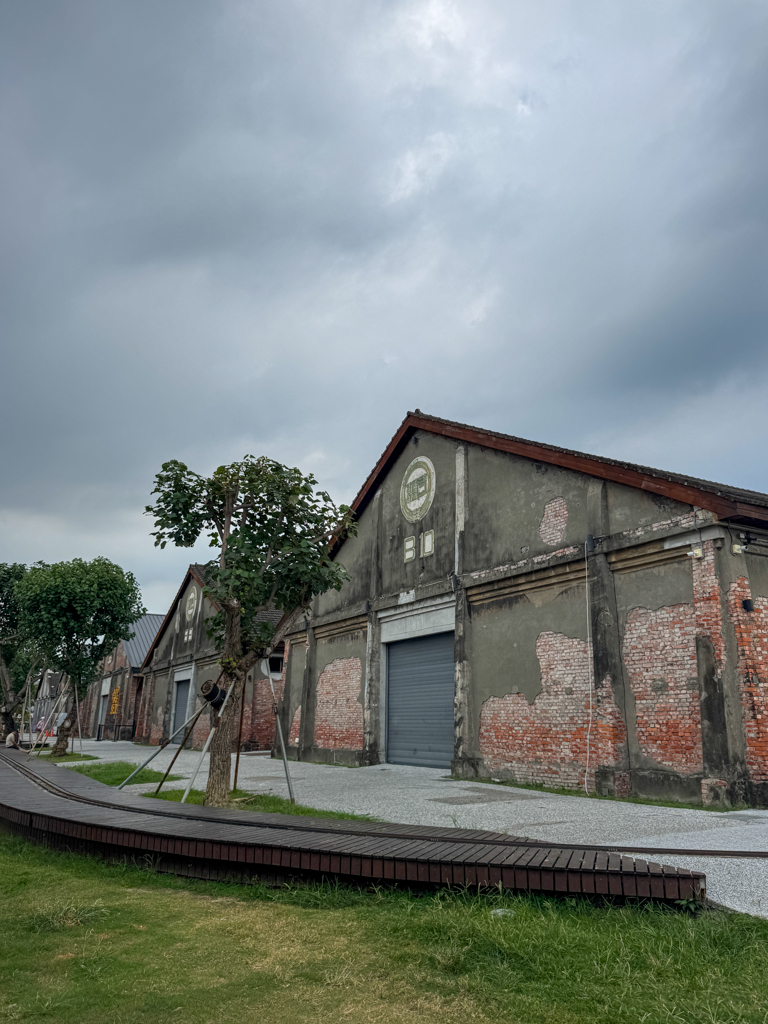
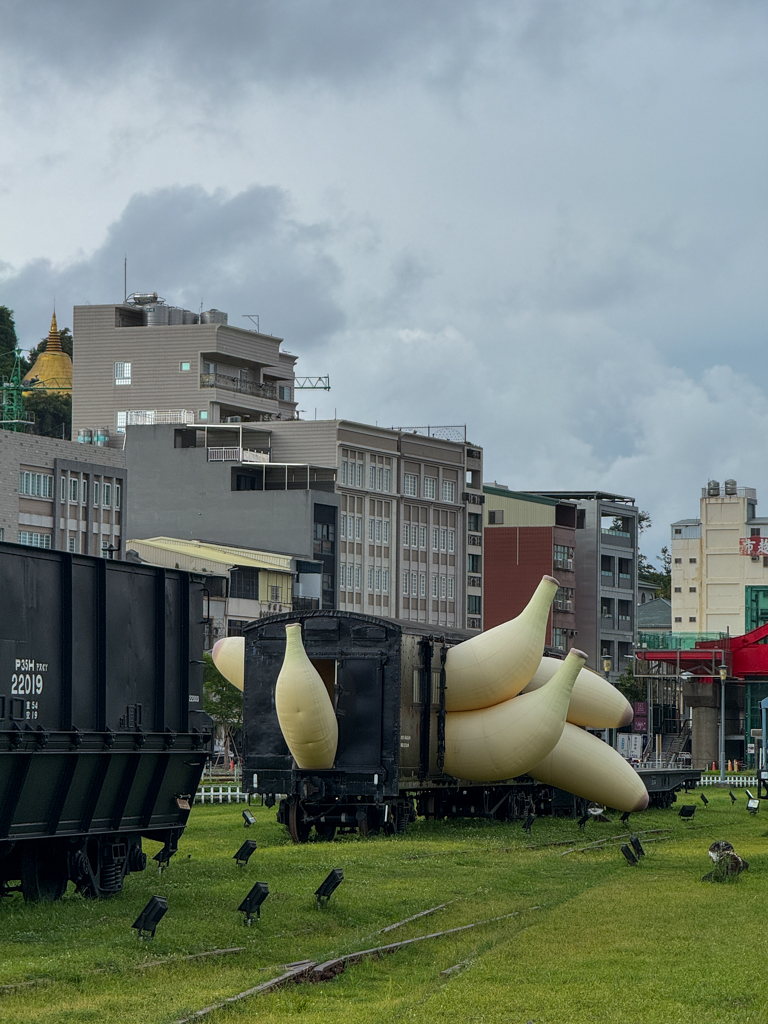
Being the town centre, it underwent significant development during the Japanese occupation in the late 19th and early 20th centuries, featuring many Western structures and infrastructure. While it thrived as a port, the economic focus gradually shifted east, leading to its decline.
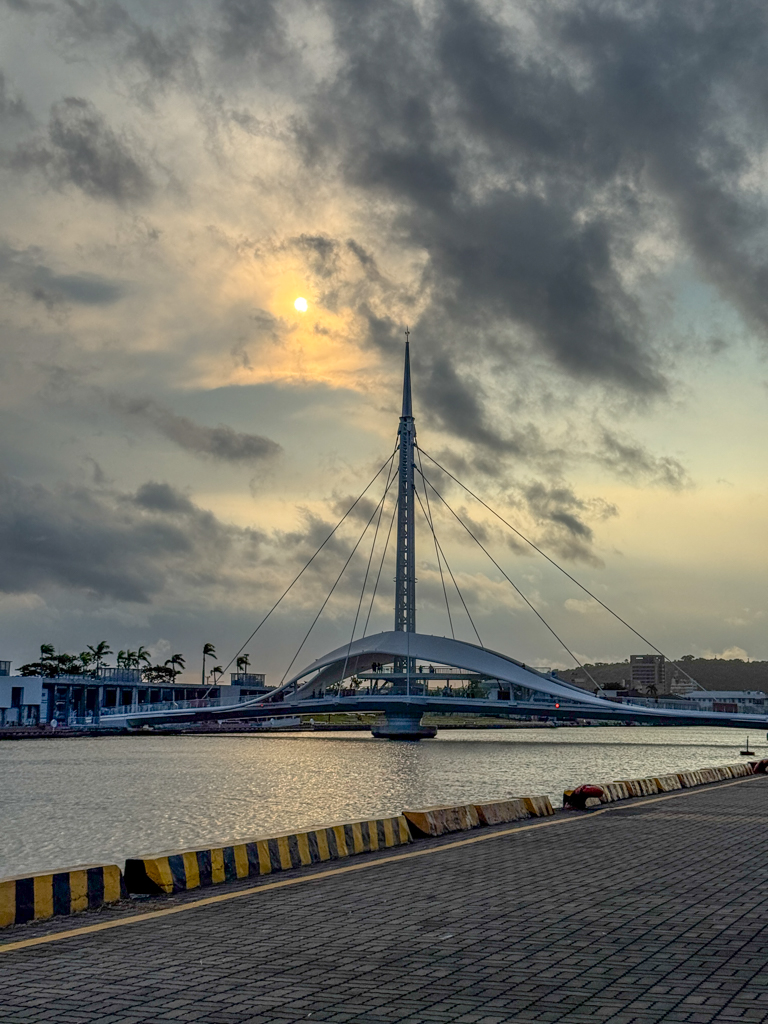
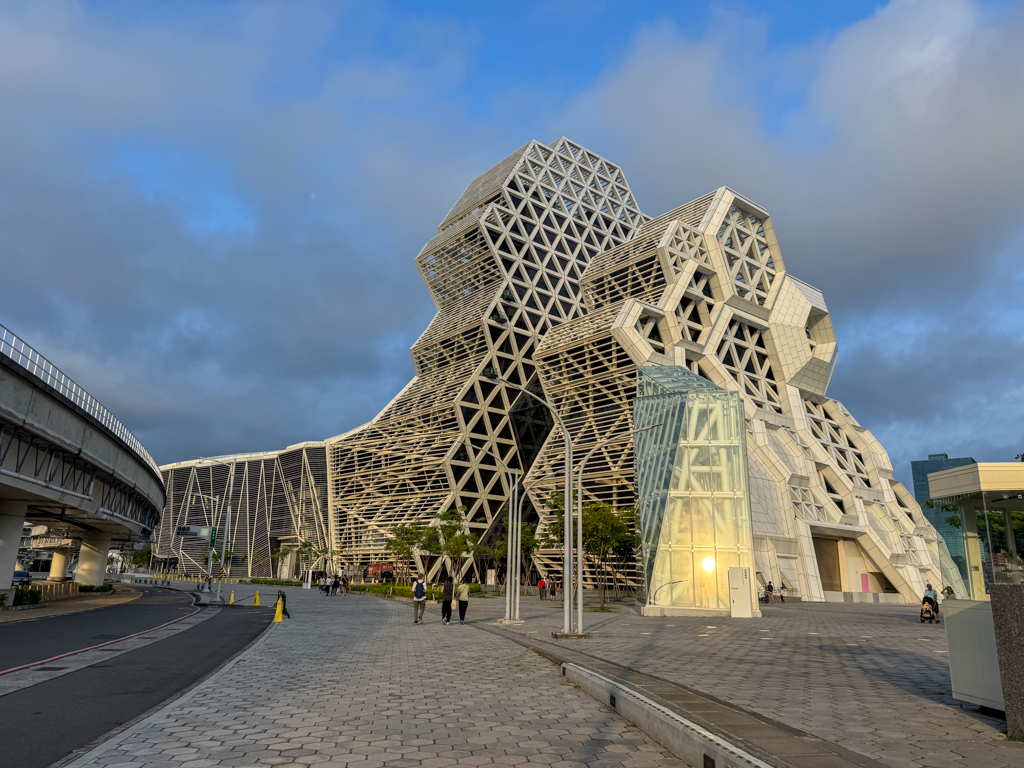
Nowadays, it has become a cultural and artistic hub, popular with domestic and international tourists. The most famous attraction is the former pier warehouse turned artsy district, aka the Pier 2 Art District, but I also particularly enjoyed the old streets, cafes, and the free history museum!
You can spend a full day or half a day in Yancheng, depending on what you would like to see.
Cijin 旗津
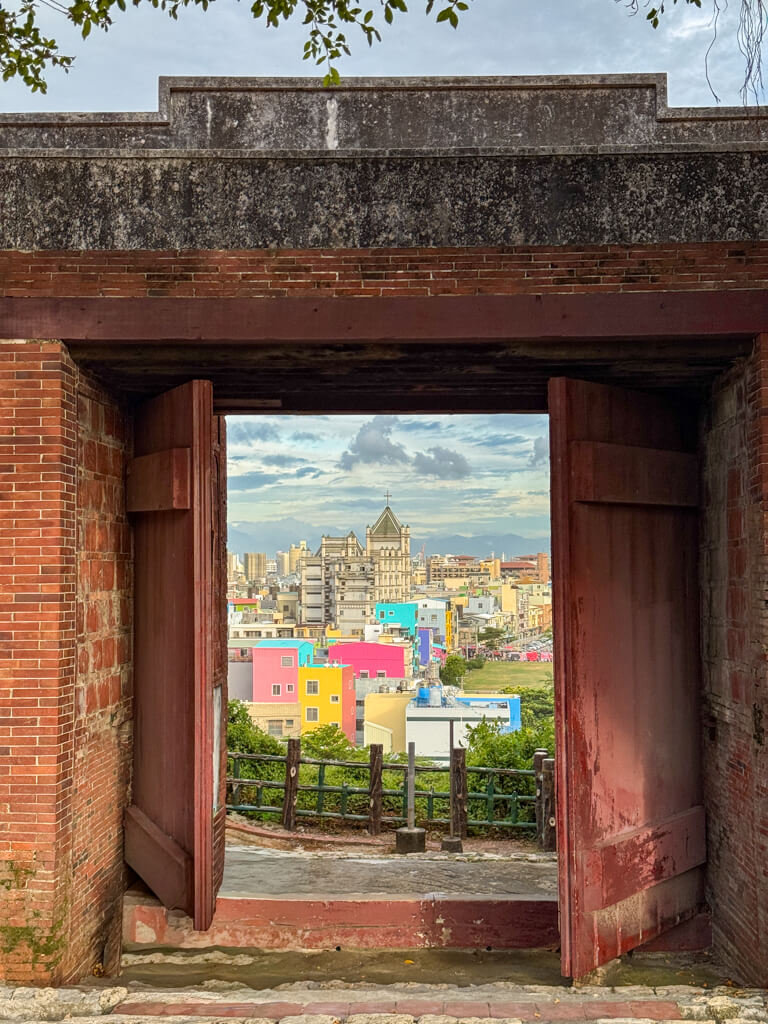
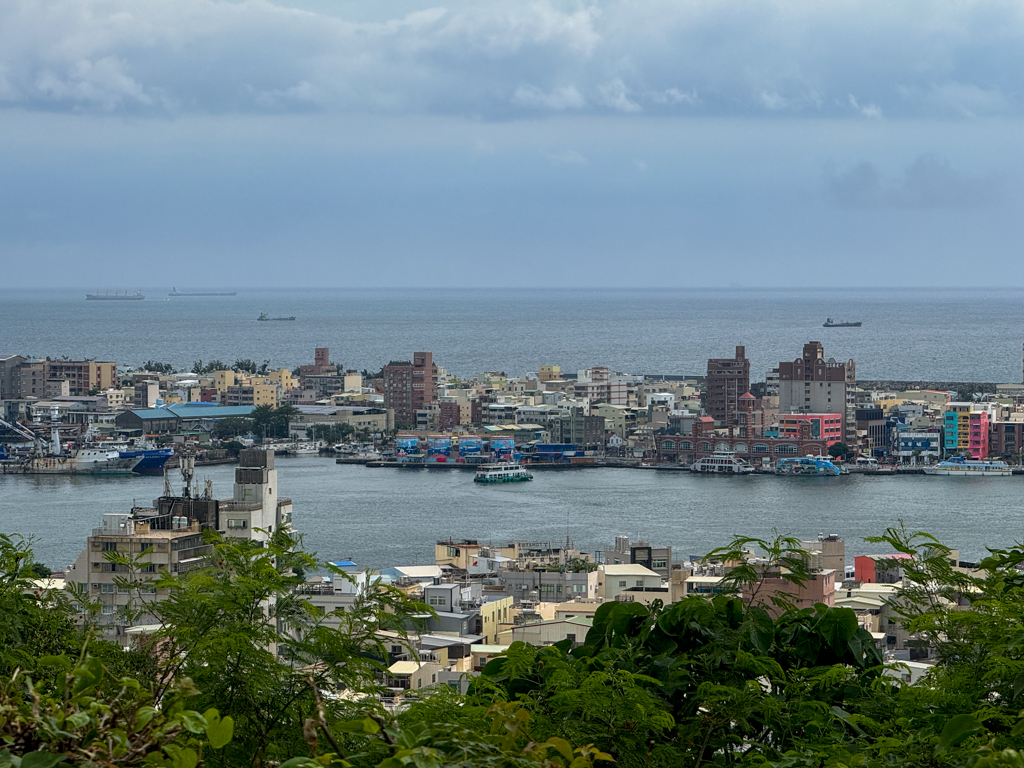
Cijin is an island that was naturally formed as a sandbank and later expanded using sand dredged from the inner harbour. It is one of the older parts of Kaohsiung, accessible by several ferries and a tunnel in the south.
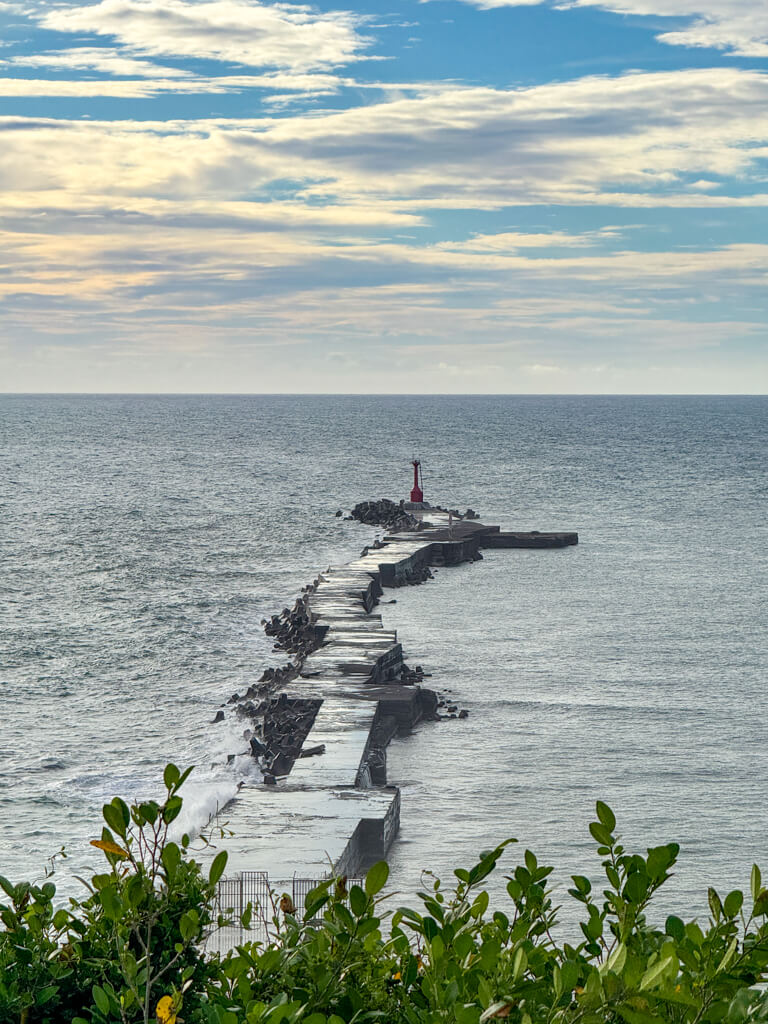
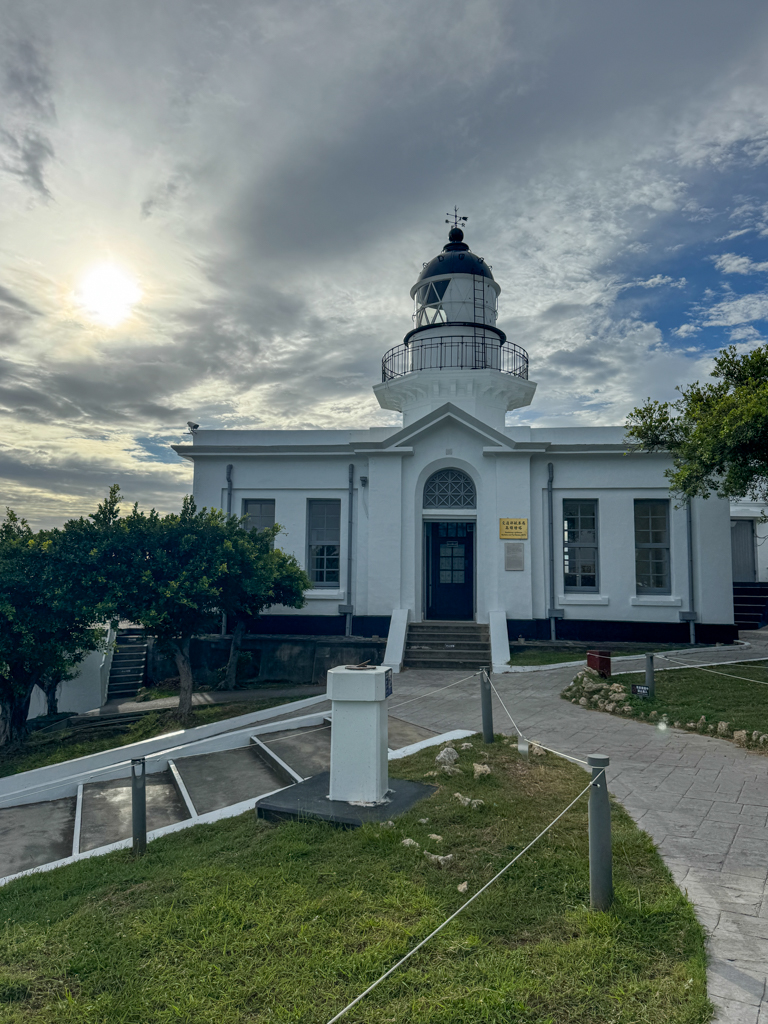
Since most attractions are located on the northern end like the Cijin Fort, Cihou Hill, and the lighthouse. The most economical and convenient way to get there is to take the ferry from Gushan Ferry Pier Station 鼓山輪渡站, which is a 10-minute walk from the end station of the Orange line, Hamasan.
Gushan Ferry Pier Station 鼓山輪渡站
Ferry services run frequently.
Cost: 30 NTD per ride; you can pay using the EasyCard.
Formosa Boulevard
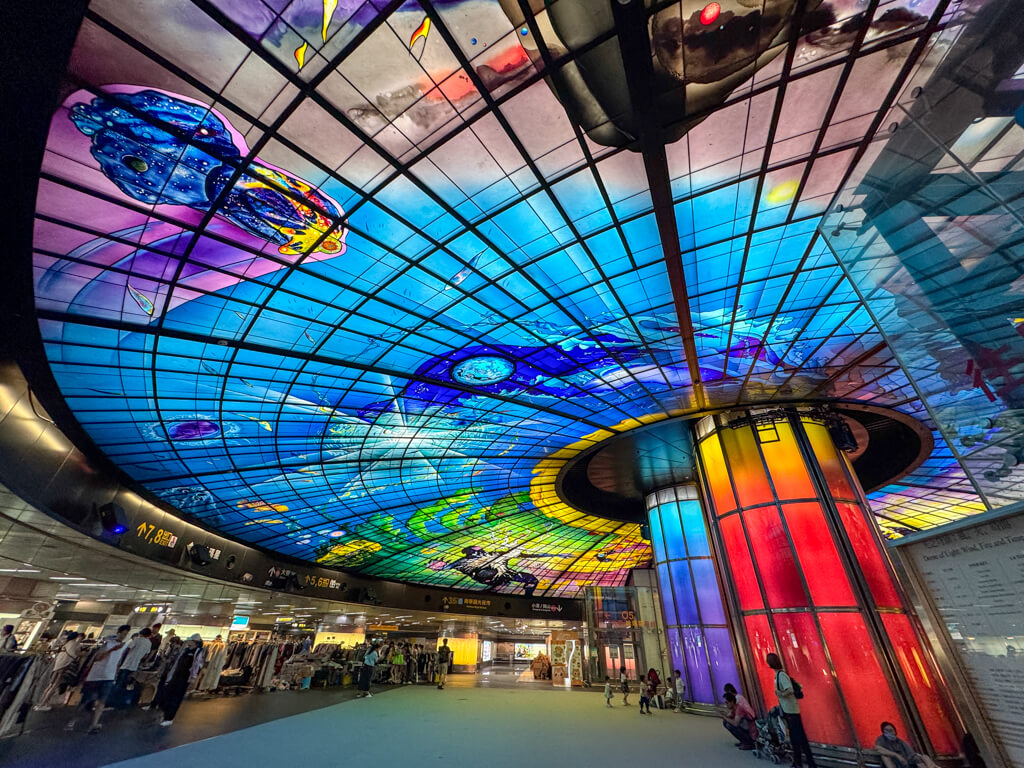
The Formosa Boulevard is at the intersection of the two MRT lines in Kaohsiung in the heart of the city. It was completed in 2008 with an impressive dome made of over 4,500 glass panels, designed by artist Narcissus Quagliata.
The dome showcases a vibrant light installation called “The Dome of Light,” which symbolises various themes such as fertility, harmony, and the cycle of life. This station not only serves as a vital transport hub but also as an artistic landmark, reflecting the city’s commitment to blending functionality with aesthetic appeal.
Hanshin Arena Shopping Plaza 漢神巨蛋購物廣場
Hanshin Arena, opened in 1995, was one of the first shopping plazas in Kaohsiung to integrate retail with entertainment. Situated next to the Kaohsiung Arena, it frequently hosts major events, concerts, and exhibitions, making it a focal point for both locals and tourists. The plaza has evolved over the years, becoming a popular destination for shopping and leisure, contributing to the revitalisation of the surrounding area.
Opening times: 11:00 – 22:30
Love River
The Love River, known as “Ai He” in Mandarin, has been an integral part of Kaohsiung’s identity since the 19th century. Originally a bustling trade route, the river fell into neglect in the latter half of the 20th century.
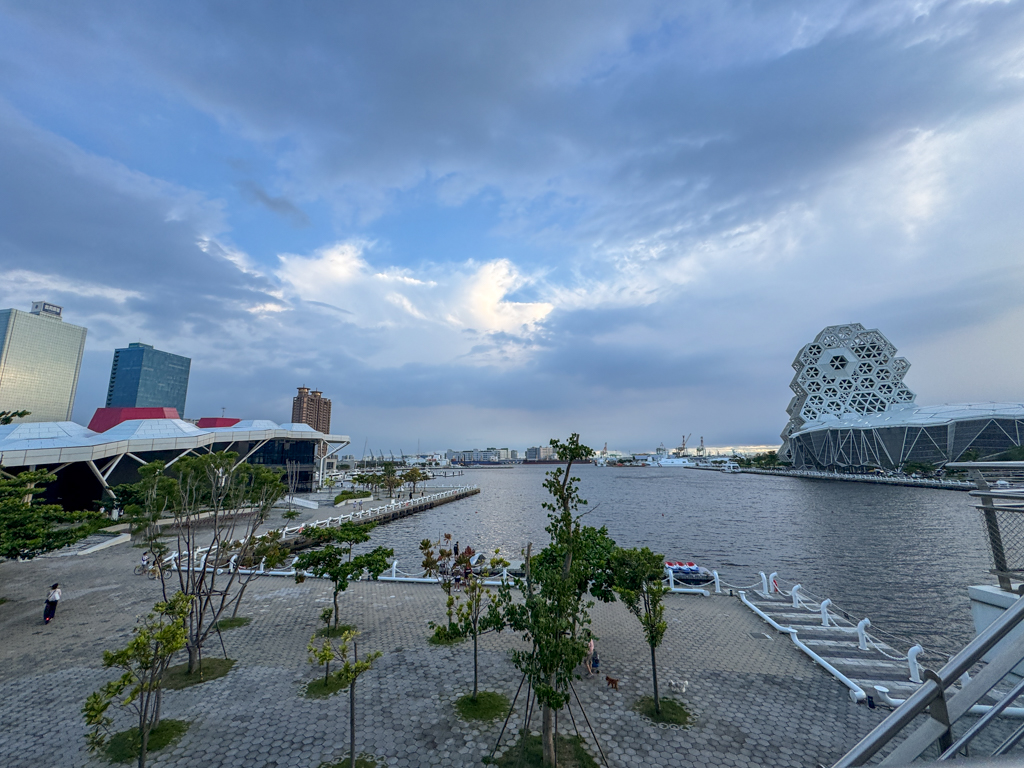
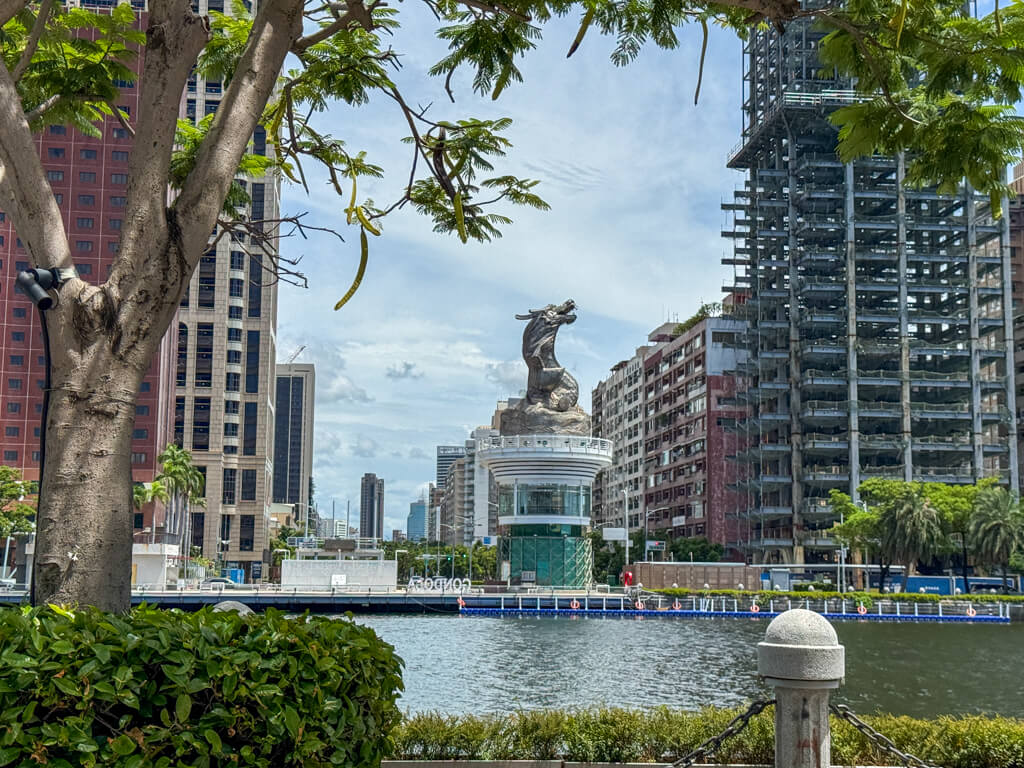
However, in recent years, extensive revitalisation efforts have transformed the waterfront into a beautiful promenade lined with cafes, parks, and recreational areas. The Love River is now famous for its romantic boat rides, vibrant nightlife, and cultural events, making it a favourite spot for both residents and visitors seeking to enjoy the picturesque scenery of Kaohsiung.
*The best place to see the river is from the Yancheng area! See my Yancheng guide for more details~
Or you can go on a cruise!
Dragon and Tiger Pagodas 龍虎塔

The Dragon and Tiger Pagodas were built in 1976 and are one of the most iconic landmarks in Kaohsiung. The pagodas are designed to symbolise good fortune and prosperity.

Visitors enter through the dragon’s mouth, which leads them through its body, and exit through the tiger’s mouth, representing the concept of transformation. Each dragon and tiger represents different virtues: the dragon symbolises strength and power while the tiger embodies bravery and courage.

The surrounding Lotus Pond is also home to various other pavilions and temples, making it a cultural and spiritual site for both locals and tourists. The area is particularly vibrant during festivals and provides an insightful glimpse into Taiwanese religious practices and beliefs.
How to get there: the pagodas can be reached from Kaohsiung Arena Station via the 301 Shuttle Bus. If you fancy walking, it’s 30 minutes!
Opening hours: 8:00 – 18:00
Shoushan National Nature Park (壽山國家自然公園)
Shoushan, or Monkey Mountain, is rich in biodiversity and has been designated a national park to protect its unique flora and fauna. It’s located on the northeast corner of the city bordering Yancheng and directly across from Cijin.
There are quite a few trails with great views – and you might get to see the famous Formosan rock monkeys!
The main hiking trail is the Chaishan Trail 柴山登山步道, which has 7 route options:
- Longquan Temple Trailhead → Longmen Pavilion (Total length: 1000 meters)
- Nanshoushan Trailhead → Guanlin Pavilion (Total length: 1080 meters)
- Beshoushan Trailhead → Phoenix Pavilion (Total length: 2360 meters)
- Nanshoushan Trailhead → Qiman Station (Total length: 3140 meters)
- Longquan Temple Trailhead → Xiaoping Pavilion/Pingding Pavilion (Total length: 3400 meters)
- Longquan Temple Trailhead → Yazuo Pavilion (Total length: 4020 meters)
- Longquan Temple Trailhead → Qiman Station → Beshoushan Trailhead (Total length: 6160 meters)
*Yazuo Pavilion is a popular stop with free tea provided by volunteers!
The British Consulate at Takao (打狗英國領事館)

Constructed in 1865, the British Consulate is a historic venue that served as the British consul’s residence and office. It reflects colonial architecture and has been converted into a museum. The site provides insight into Kaohsiung’s foreign relations during the colonial period, along with stunning views of the harbor and cityscape.
Opening times: Mon – Tues, Weds – Thurs 10:00 – 19:00; Sat – Sun 9:00 – 19:00